
Pros and cons of living in MetroWest Boston (Honest breakdown)
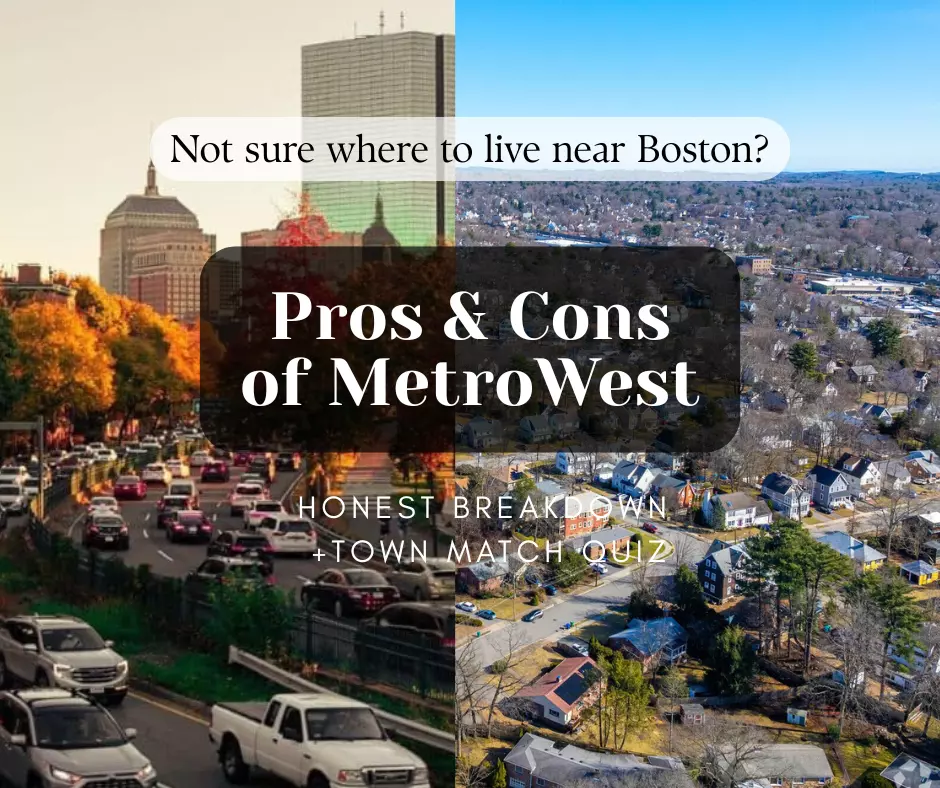
Thinking about moving to the Boston area, but the city prices and tiny condos are starting to feel…wrong?
That’s usually when people stumble onto “MetroWest.”
Then the questions start:
-
Is MetroWest actually a good move or just “cheaper suburbs”?
-
Will my commute be miserable?
-
Are the schools and lifestyle really any better?
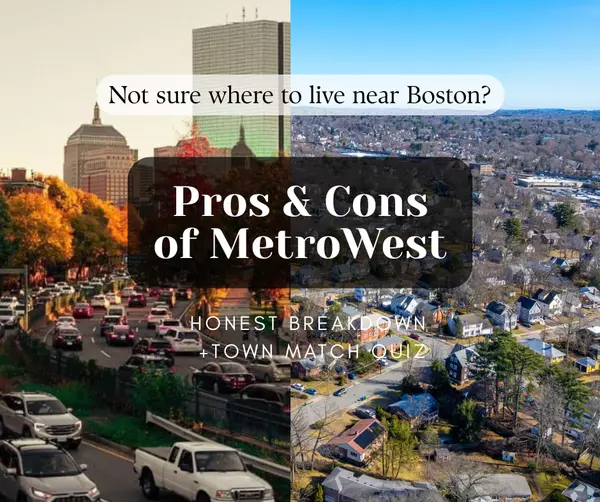
This is your straight-up, no-fluff breakdown of the real pros and cons of living in MetroWest Boston, especially if you’re a relocation buyer trying to make one big decision from a distance.
Want help matching towns to your budget and commute instead of guessing? Take the Boston Area Town Match Quiz here.
Prefer to watch instead of read? Here's my full video breakdown of the pros and consof living in Metrowest Boston
Who is even considering MetroWest?
Most people who end up seriously looking at MetroWest fall into a few groups:
City people who feel “done” with Boston living
You’ve tried the city. Maybe you love the vibe but you’re over:
-
High rents or HOA fees
-
No parking
-
Tiny space for the money
-
Walking past three other people’s trash barrels to get to your door
You still want access to Boston, but you want more space and sanity.
If you’re planning a full relocation to the area, you might also like my post on How to Make a Successful Relocation Move to Boston & MetroWest, Massachusetts.
Relocation buyers moving to Massachusetts for work
You got a job offer in or around Boston, Cambridge, Waltham, or one of the big suburban office hubs (Route 128 / Mass Pike corridor). You:
-
Don’t know the area
-
Need to balance commute + schools + lifestyle
-
Don’t have time to “figure it out” by trial and error
Growing families trading up from a starter home or condo
You already own something closer in, but:
-
You’ve outgrown the space
-
You want a yard
-
You’re thinking long-term about schools and resale
MetroWest is where a lot of those buyers land when they want more house, better lifestyle, still close enough to Boston.
If that sounds like you, keep reading.
Top pros of living in MetroWest Boston
1. More space and house for your money (relative to closer-in)
No, MetroWest is not cheap. This is still Greater Boston.
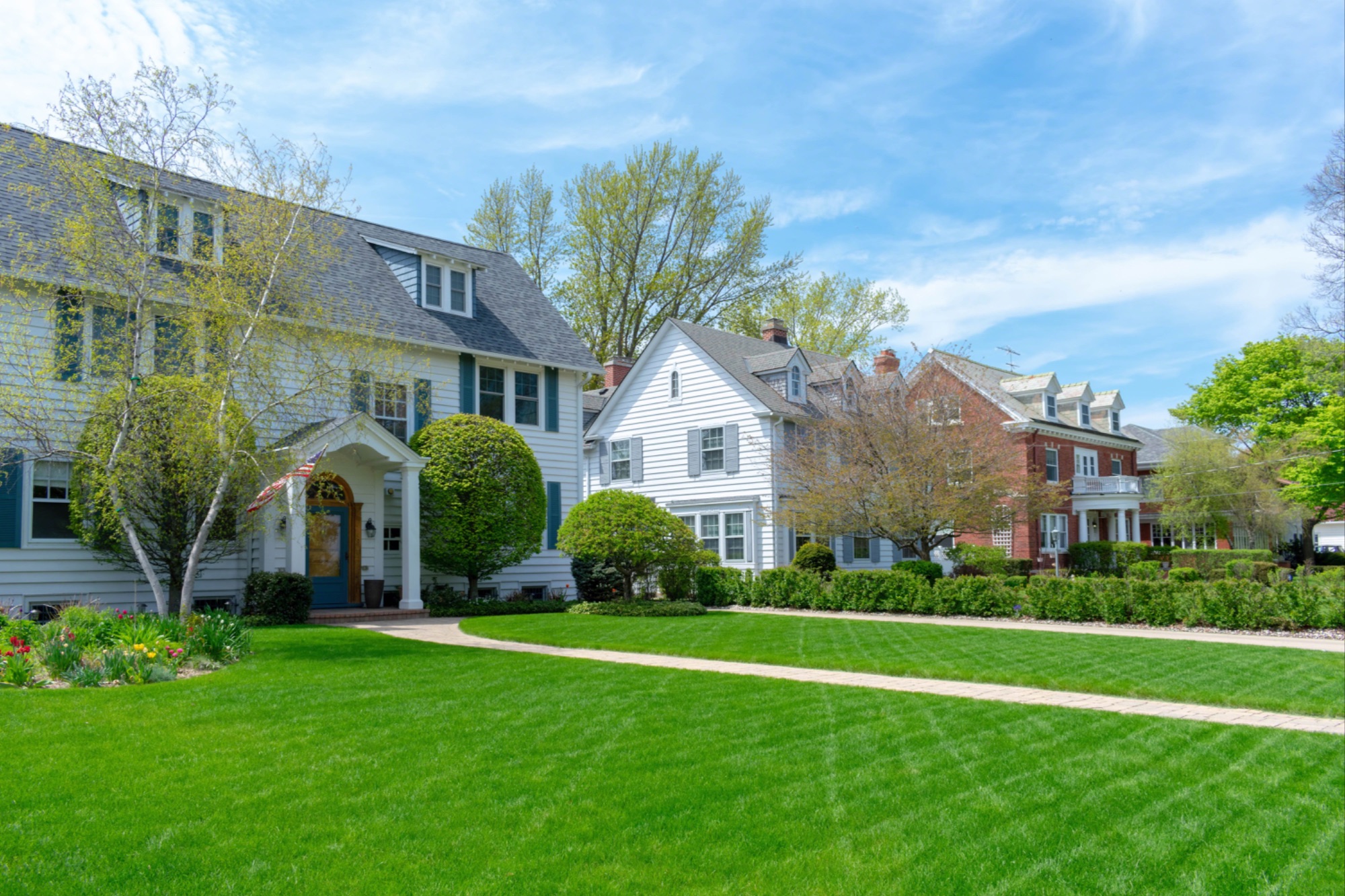
But compared to many neighborhoods closer to the city, your money usually goes further.
In MetroWest, it’s much more common to get things like:
-
A real yard (not a postage stamp)
-
Driveway or garage parking
-
3–4 bedrooms instead of 1–2
-
A single-family home instead of a condo
If you’re coming from a city where you pay a premium to share walls and hunt for street parking, MetroWest feels like you’re finally getting what you pay for.
2. Strong school options and family-oriented towns
A big driver: schools.
Many MetroWest towns are known for:
-
Well-rated public schools
-
Strong extracurriculars and sports
-
Involved communities and PTAs
-
A very “family-centric” culture
That doesn’t mean every town on a list is automatically right for you.
Some are more competitive and intense, others more relaxed. But in general, if you’re thinking:
“I want my kids to have good options without paying $60K/year for private school.”
…MetroWest is where a lot of people start looking.
3. Better daily quality of life for a lot of people
For many buyers, MetroWest hits a better day-to-day lifestyle balance:
-
Quieter streets than the city
-
More green space, parks, and trails
-
Actual backyards for kids, dogs, and grilling
-
Grocery, Target, gym, and coffee all within a short drive
You’re not in the middle of everything 24/7 like downtown Boston, but you’re also not in the middle of nowhere. For a lot of people, that middle ground is exactly what they want.
4. Solid access to major job hubs and highways
MetroWest is basically built around access:
-
Mass Pike (I-90)
-
Route 9
-
I-95 / 128
-
Commuter rail lines from several towns into Boston
If you work in Boston, Cambridge, Waltham, Needham, or nearby tech/biotech corridors, MetroWest can give you a reasonable commute and a suburban lifestyle, as long as you pick the right town and location within that town.
5. Variety of town personalities (not every suburb feels the same)
This is a big upside if you know how to use it.
MetroWest isn’t one vibe. Within about 20–40 minutes west of Boston you can find:
-
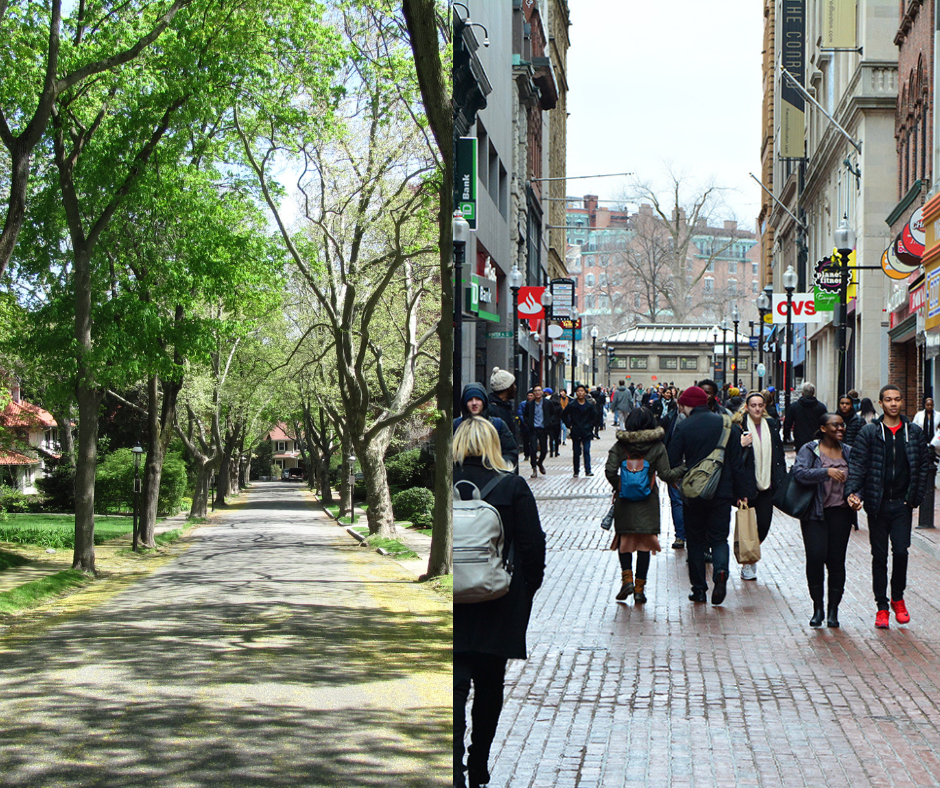
Denser, more walkable downtowns
-
Quieter, more rural-feeling areas
-
Trendy coffee shops and restaurants
-
Sleepier, old-school New England neighborhoods
If you care about lifestyle fit,, that variety is a pro, if you take the time to match your priorities to the right town.
My Boston Area Town Match Quiz is designed to shortcut that process for you.
Top cons of living in MetroWest Boston
Now the stuff people don’t like to talk about.
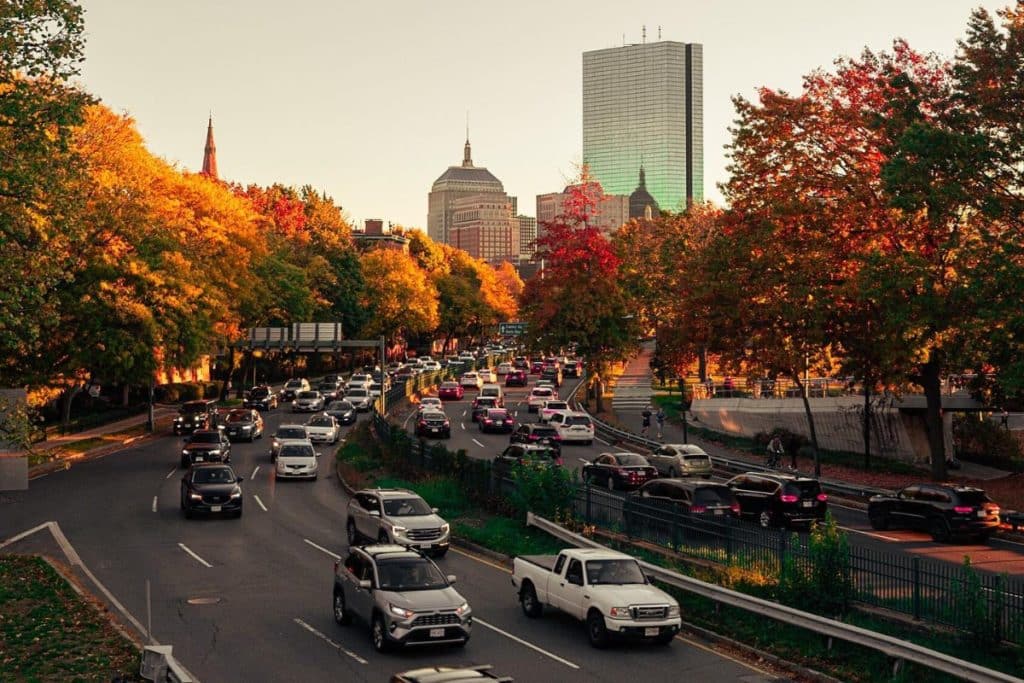
1. The commute can be rough if you get it wrong
Yes, you’re “near Boston.”
No, that doesn’t always mean a painless commute.
Common pain points:
-
Heavy traffic on the Pike and 95 during rush hours
-
Commuter rail schedules that may not line up with your work hours
-
Driving from your house to the station, then waiting for the train, then walking or transferring on the Boston side
If your job is rigid on hours or located far from a T stop, you need to be very strategic about which town you choose and how far from the station or highways you live.
2. Less nightlife and walkability in many areas
If you love:
-
Stepping out your door and walking to bars, restaurants, and events
-
Being surrounded by people at all hours
-
Having multiple nightlife options blocks away
Some parts of MetroWest will feel…quiet.
There are towns with decent downtowns, restaurants, and some energy. But overall, this is suburban living. A lot of evenings look like:
-
Driving to dinner
-
Kids’ activities
-
House projects
-
Netflix, not nightclub
If you need constant buzz and walkable nightlife, this may be a downside.
3. You can’t treat “MetroWest” like one big interchangeable blob
This is the mistake a lot of relocation buyers make:
“We’ll just look anywhere in MetroWest. It’s all basically the same, right?”
Not even close.
Differences between towns can be huge in terms of:
-
Price point
-
Property type (older capes vs newer colonials vs condos)
-
School culture
-
Politics and community vibe
-
Access to transit
-
Taxes and fees
If you don’t narrow this down properly, you’ll waste a lot of time and still feel unsure. That’s why I push people to get specific on priorities instead of randomly scrolling.
4. Older housing stock and ongoing maintenance
A lot of homes in MetroWest are:
-
Older New England colonials, capes, ranches
-
Built decades ago, sometimes over 100 years old
That can mean:
-
Smaller closets and bedrooms in certain homes
-
Old systems (roof, windows, HVAC) that need attention
-
Layouts that don’t match modern “open concept” expectations
If you want brand-new, turnkey, high-ceiling, wide-open everything at a starter price… MetroWest might challenge your expectations. You can find newer builds, but you’ll pay for them.
5. You’ll probably need (and use) a car. A lot.
In many MetroWest towns, day-to-day life is built around driving:
-
Groceries
-
Kids’ activities
-
Gym
-
Coffee
-
Work
If you’re trying to avoid owning a car or you hate driving, that’s a real con. Some pockets are more walkable, but “no car” living is not the norm out here.
Who MetroWest is good for
You’ll probably like MetroWest if:
-
You want more space and comfort without completely disconnecting from Boston
-
You value schools, family life, and safety
-
You’re okay trading some nightlife and density for yards, driveways, and quieter streets
-
You either:
-
Work west of Boston, or
-
Have a commute situation that can realistically work with the Pike/95/commuter rail
-
You don’t need to be a “suburb person” on day one. A lot of people grow into it fast once they realize how much easier daily life can be.
If you’re already a homeowner in Framingham, Natick, or Waltham, check out Framingham, Natick & Waltham Homeowners: You Might Be Sitting on More Equity Than You Think.
Who MetroWest is not good for
MetroWest might not be a fit if:
-
You want a car-free lifestyle and rely on walking or public transit for everything
-
You need intense nightlife, constant events, and city energy right outside your door
-
You’re expecting prices to feel “cheap” compared to other parts of the country (they won’t)
-
You have a job in a tough-to-reach part of Boston and no flexibility on hours
In those cases, you might be better off in a closer-in neighborhood, a different suburban direction, or even another metro altogether.
Stop guessing towns. Start with a Town Match.
Scrolling Zillow and Googling “best towns near Boston” is how people stay confused for months.
If you’re serious about relocating to MetroWest or Greater Boston, the first step isn’t picking a house.
It’s picking the right towns for your:
-
Budget
-
Commute
-
School preferences
-
Lifestyle (more quiet vs more action)
That’s exactly why I created my Boston Area Town Match Quiz.
It’s a quick set of questions that helps narrow down which MetroWest (and nearby) towns actually line up with what you care about, not just what looks pretty online.
👉 Click here to submit the Town Match Form and get your customized town shortlist.
Once you’re done, I’ll review your answers and send you targeted suggestions instead of generic “you should check out everything” advice.
If you’re thinking about MetroWest, don’t guess. Start with clarity, then build a plan around it
Categories
Recent Posts

Want a clear next step?
SELLING? Get a home value range here
BUYING? Click here for Town Match Quiz
Or send me a message and I’ll get back to you.